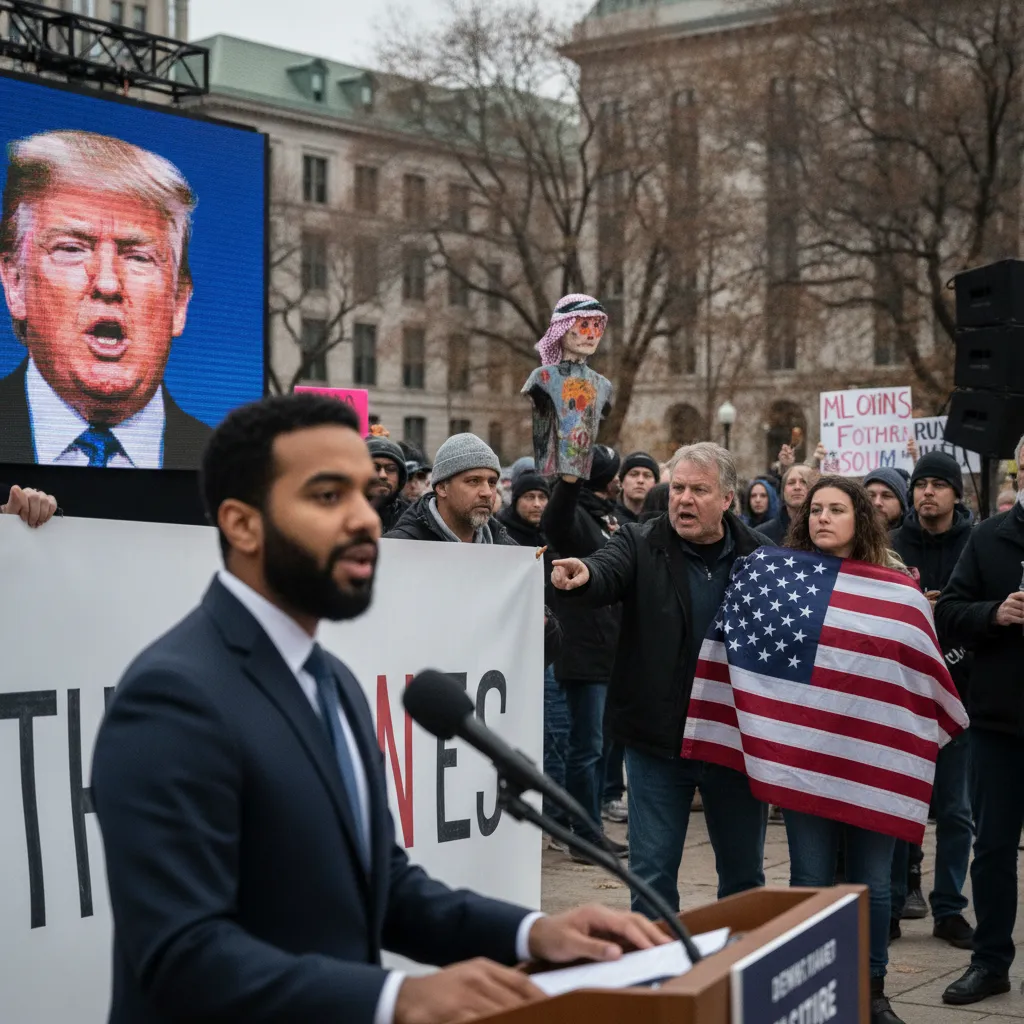
The high stakes of the Michigan Senate race have shifted from traditional political grievances to a volatile debate over religious identity and national loyalty. While candidates typically spar over inflation, trade wars, and healthcare, the campaign against Democrat Abdul El-Sayed has taken a sharp turn toward the personal. Rhetoric coming from Donald Trump and his allies has increasingly suggested that El-Sayed is unfit for office not because of his policies, but because of his faith. By painting him as an outsider or questioning his patriotism, critics are moving beyond standard campaigning into territory that many describe as blatant bigotry.
Donald Trump has led this charge with a series of aggressive attacks, ranging from mocking El-Sayed’s name to suggesting that special security measures would be necessary if he entered the Senate. These comments frequently equate the practice of Islam with extremism, reflecting a broader pattern seen throughout Trump’s political career where cultural and religious differences are weaponized during tense electoral moments. Even within the GOP ticket, there is a spectrum of approach; while candidate Mike Rogers focuses more on alleged ties to overseas Islamist groups, others like Senator Bernie Moreno have been far more explicit, implying that someone who doesn’t share a Christian worldview has no business serving in Washington.
This shift raises profound questions about the endurance of American constitutional principles. Article VI of the Constitution explicitly forbids any religious test as a qualification for public office, yet current rhetoric suggests that certain faiths act as automatic disqualifiers. Legal scholars note that these attacks represent a push toward Christian nationalism and a rejection of the secular foundation upon which the U.S. government was built. When opponents suggest that citizenship and rights are contingent upon specific theological beliefs, they challenge the very notion of pluralism that defines modern American identity.
While it remains fair for voters to scrutinize El-Sayed’s foreign policy views or political associations, there is a stark difference between debating ideology and attacking an individual’s right to exist in public service based on their religion. The aggression directed at El-Sayed serves as a flashpoint for a larger struggle within the country: whether America will remain a diverse republic governed by law or drift toward an era where authenticity is measured by adherence to a narrow set of racial and religious dogmas. As Election Day approaches, Michigan voters will decide not just who represents them in the Senate, but what standards of decency and inclusivity they expect from their leaders.